
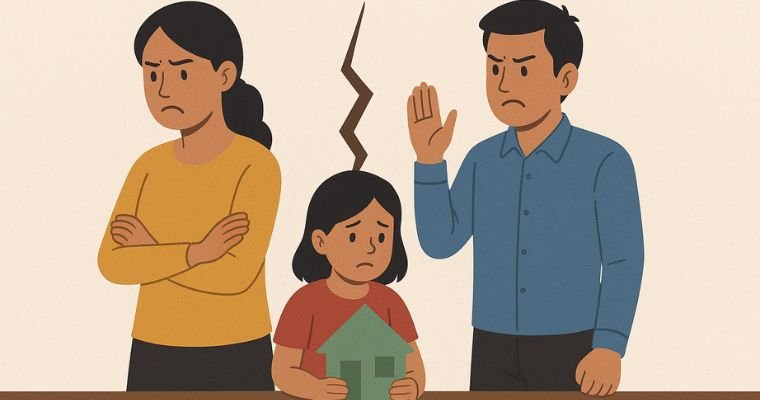
What Are Child Property Rights After Divorce in India?
Divorce can be hard for everyone, especially children. When parents separate, many questions come up about the future of the child. One of the most important concerns is property rights. Parents often want to know what rights their child has after a divorce and how the law protects the child’s future.
In India, child property rights after divorce are guided by personal laws, court judgments, and the principle that the child’s welfare comes first. Divorce does not take away a child’s rights. A child remains legally connected to both parents even after they separate. Parents often consult a divorce lawyer in Delhi to get proper clarity on these rights during or after the separation process.
Understanding Child Property Rights in Simple Terms
Child property rights mean the legal right of a child to claim ownership or a share in certain properties. These rights exist even if the parents are divorced. A child may have rights in:
- Ancestral property
- Self-earned property of parents (in some cases)
- Property settled or gifted for the child
- Property decided by court orders
The law focuses on protecting the child’s future and financial safety.
Does Divorce Affect a Child’s Property Rights?
Divorce only ends the marriage between parents. It does not end the relationship between parents and children. From a legal point of view:
- A child remains the legal heir of both parents
- Divorce does not cancel inheritance rights
- Property rights stay protected under the law
Even if the child lives with one parent, the rights remain the same for both sides.
Rights in Ancestral Property After Divorce
Ancestral property is property passed down through generations in a family. Under Hindu law:
- A child has a birthright in ancestral property
- The divorce of the parents does not impact this right
- Both sons and daughters have equal rights
If the father has ancestral property, the child can claim a share in it, regardless of divorce.
Rights in Self-Earned Property of Parents
Self-earned property means property bought or earned by a parent using their own income. In this case:
- A child does not get an automatic right during the parents’ lifetime
- The parent can choose how to use or transfer the property
- The child becomes a legal heir after the parent’s death if no will exists
Courts may also order financial support or settlements for the child. Many families seek guidance from the Best Lawyer for Divorce in Delhi to understand how such property-related decisions can be handled legally.
Property Rights Under Different Personal Laws
India follows different personal laws based on religion. Child property rights may vary slightly under each law.
Hindu Law
- Equal rights for sons and daughters
- Rights in ancestral property by birth
- Inheritance rights in self-earned property
Muslim Law
- No concept of ancestral property
- Property rights arise only after the parent’s death
- Shares are fixed as per Islamic law
Christian and Parsi Law
- Property is divided as per succession laws
- Children inherit property after their parents’ death
Divorce does not remove these rights under any personal law.
Child Custody and Property Rights
Child custody and property rights are two different legal matters, but they are connected in practice.
- Custody decides where the child lives
- Property rights decide financial security
Even if one parent gets custody, the other parent must support the child financially. Courts can direct property-related arrangements for the child’s benefit. In complex custody cases, parents often seek guidance from a child custody lawyer in Delhi to understand their rights and duties.
Role of the Court in Protecting Child Rights
Indian courts always focus on the child’s welfare. Judges may:
- Order monthly maintenance for the child
- Secure funds or property for education and living needs
- Restrict the misuse of property meant for the child
The court ensures that the child’s future is not harmed because of divorce.
Can a Child Claim Property During the Parent’s Lifetime?
In most cases:
- A child cannot demand a share in self-earned property while the parent is alive
- A child can claim a share in ancestral property
- Courts can create settlements or trusts for the child
This helps balance parental rights and child protection.
Property Settlements During Divorce
Sometimes parents decide property matters during the divorce itself. This may include:
- Transferring property in the child’s name
- Creating fixed deposits or trusts
- Assigning rental income for child expenses
Such settlements are usually recorded in court to avoid future disputes.
What Happens If One Parent Remarries?
Remarriage does not cancel a child’s property rights.
- The child still remains a legal heir
- Stepchildren do not affect a biological child’s rights
- Property rights stay protected by law
Courts ensure fairness so that the child’s share is not reduced unfairly.
Conclusion
Child property rights after divorce in India are strongly protected by law. Divorce affects only the marriage, not the legal bond between parents and children. Whether it is ancestral property, inheritance, or financial support, the child’s interests come first.
Understanding these rights helps parents plan responsibly and avoid future conflicts. With the right legal knowledge and timely support, parents can ensure that their child’s future remains secure, stable, and protected.
Frequently Asked Question
No, children do not lose any property rights after divorce. The law clearly protects a child’s rights, regardless of the marital status of the parents.
Yes, a child can inherit the mother’s property as a legal heir. Divorce does not affect this right.
No, custody only decides where the child lives. Property rights remain the same for both parents.
In most cases, no. A child cannot be fully denied rightful inheritance under Indian law.
Yes, parents can transfer property or create financial arrangements for the child during divorce, with court approval.
Table of Contents

Advocate Priya Paul
Advocate Priya Paul, a proactive Delhi-based lawyer, leads a skilled team and shares legal insights through her blog to help readers navigate the law.
Advocate Priya Paul
Advocate Priya Paul, a proactive Delhi-based lawyer, leads a skilled team and shares legal insights through her blog to help readers navigate the law.